Georgia’s American Journey: This historic Georgia plantation reveals how people lived through slavery, war, and change
At Jarrell Plantation State Historic Site, visitors can explore two preserved farmsteads that span more than 125 years from the antebellum period through the early 20th century.
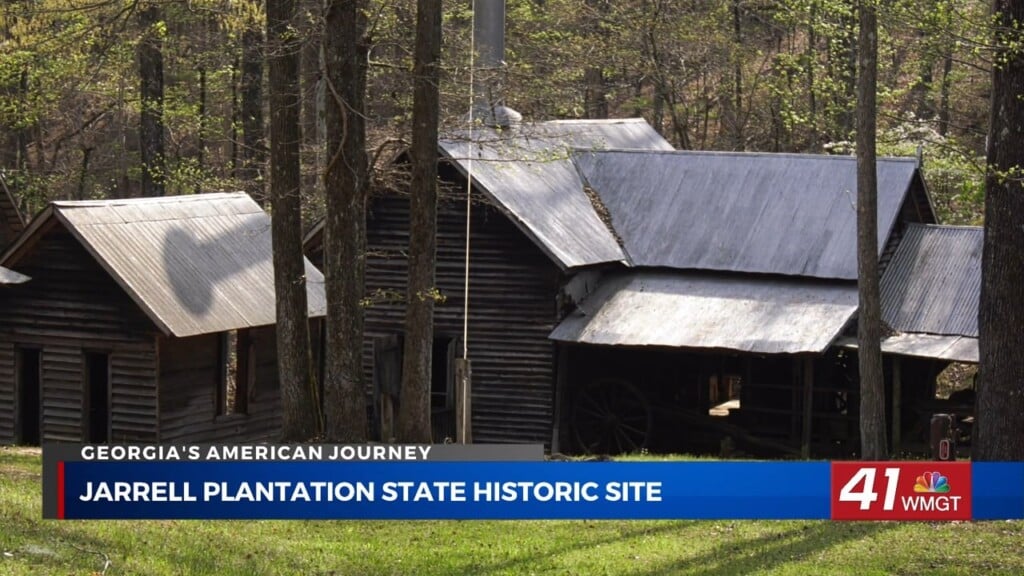
JULIETTE, Georgia (41NBC/WMGT) -A historic plantation in Middle Georgia is offering a rare, firsthand look at how life evolved from slavery to modern farming, preserving stories of hardship, survival, and transformation as the nation approaches its 250th anniversary. At Jarrell Plantation, visitors can walk through two intact farm sites from different eras, revealing how people lived, worked, and adapted through some of the most defining moments in American history.
A rare look at Georgia’s past across generations
“There are two complete farms here from different eras, and that really allows us to tell the story of Georgia’s agricultural history,” said Derek Jackson, assistant historic site manager at the Jarrell Plantation Historic Site.
Established in 1847, the plantation remained in operation through slavery, the Civil War, Reconstruction, and the rise of mechanized farming. The property includes original buildings, tools, and artifacts that illustrate how agricultural practices evolved over time.
Jackson said the site highlights a broad spectrum of history, from enslaved labor on cotton fields to the introduction of steam-powered equipment that transformed farming operations.
“One of the things that we really focus on here is the breadth of agricultural history in Georgia,” Jackson said.
Telling the stories of enslaved people
The site also works to tell the stories of the enslaved people who lived and worked on the plantation. Through educational programs, including Juneteenth events, staff members examine how lives changed from slavery to freedom.
One of those stories is that of Prince Clark, an enslaved man who lived on the plantation during the Civil War.
As Union troops moved through the area during Sherman’s March to the Sea, Clark was ordered to hide food supplies. When soldiers could not find the hidden meat, they accused him of lying and tortured him by hanging him by his thumbs until he lost consciousness.
Clark survived and was later freed after the war. He eventually returned to the area decades later as a paid laborer, reflecting the complex transition from slavery to freedom in the South.
Preserving history for future generations
For Phil Haynes, a descendant of the Jarrell family, preserving and sharing these stories is key to understanding the region’s history.
“I want them to take away what a lot of Georgians did, what their experience was and what they accomplished,” Haynes said.
Haynes also shared personal memories passed down through generations, including stories of family members who lived on the property and shaped its legacy.
Today, Jarrell Plantation stands as a preserved snapshot of rural Georgia life, documenting not only the evolution of agriculture but also the people who lived through some of the nation’s most transformative periods.
This story is part of Georgia’s American Journey: 250 Years, a 41NBC series examining Georgia’s history and its lasting impact on the United States.
Click here to explore more stories, videos, and features from across Middle Georgia.