Georgia Power battery storage facility to boost Middle Georgia power reliability
Georgia Power Region Executive Bowen Shoemaker says the project is part of a broader effort to strengthen the state’s power grid.
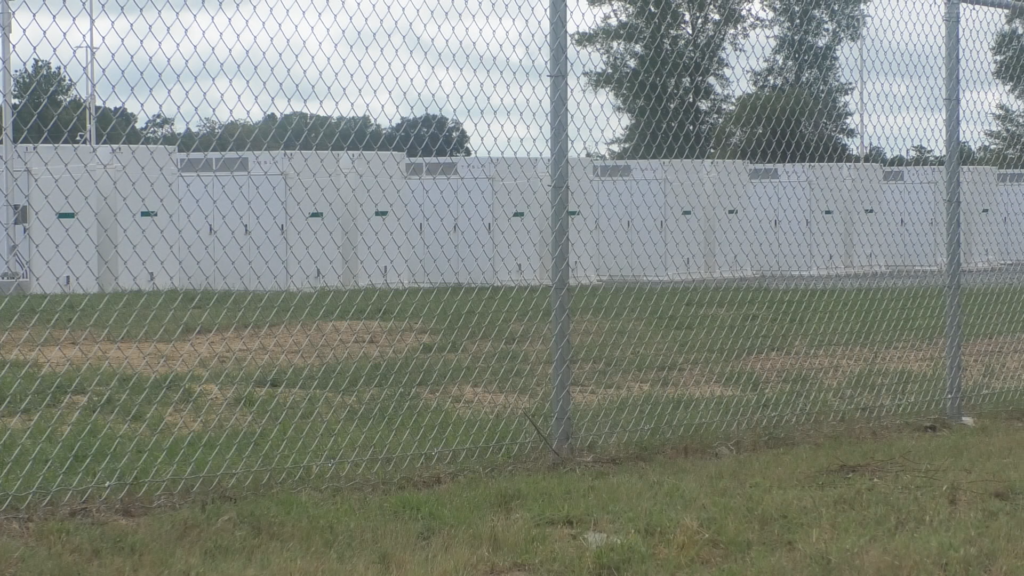
MACON, Georgia (41NBC/WMGT) – A new 128-megawatt Georgia Power battery storage facility near Robins Air Force Base is designed to strengthen power reliability by storing electricity for use when demand is high.
The battery energy storage facility works much like a large power bank, storing excess electricity that can be supplied to the power grid when it is needed.
Georgia Power Region Executive Bowen Shoemaker says the project is part of a broader effort to strengthen the state’s power grid.
“All around the state, battery energy storage systems are being recognized as critical investments that strengthen grid reliability, improve the value of renewable energy, and help ensure dependable power for growing communities,” Shoemaker said.
The facility can also provide additional reliability near Robins Air Force Base. When electricity demand increases or problems affect the power grid, the batteries can provide stored electricity to help meet demand.
Georgia Power Senior Vice President Rick Anderson says battery storage can help the company respond when problems arise on the grid.
“Batteries really help us to step into the gap whenever we have any outrage issues,” Anderson said. “For us, we’re looking to provide the most clean, safe, reliable and affordable power. When you’re talking about battery and solar, it highlights all of that. So, any excess capacity we have from the solar assets, the batteries can take it on and support our customers the best way possible,” said Anderson.
While the project does not guarantee lower electricity bills, the battery storage system is designed to improve the efficiency and reliability of the power grid.
“Because of the fruits of their labor, the product of everything is we have a project like this ahead of schedule, adding value for our customers,” Anderson said.
The facility was completed in March and is now operational.