Lawsuits raise questions about possible GLP-1 link to rare vision loss
A rare eye condition that can cause sudden and potentially permanent vision loss is at the center of lawsuits involving popular GLP-1 medications used for weight loss and diabetes.
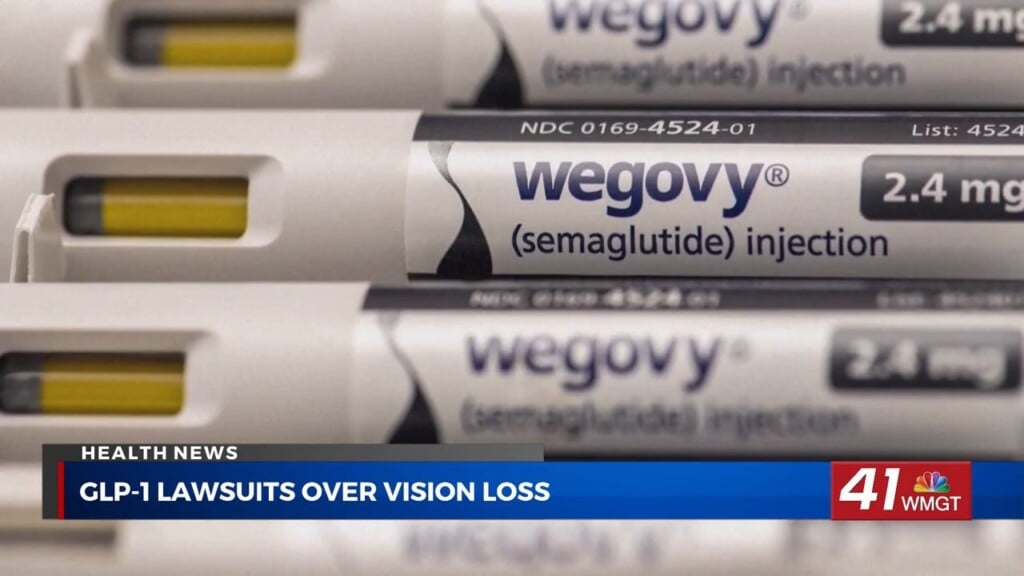
(NBC)- A rare eye condition that can cause sudden and potentially permanent vision loss is at the center of lawsuits involving popular GLP-1 medications used for weight loss and diabetes.
The condition, known as non-arteritic anterior ischemic optic neuropathy, or NAION, can cause sudden vision loss and has no known treatment.
Diane Wirth said she experienced the condition after taking a GLP-1 medication for weight loss.
“I woke up one morning and said, ‘What is wrong with my eye?’” Wirth said. “There was no warning sign at all.”
Wirth has lost vision in her right eye and said the condition forced her to leave her job as a nurse practitioner. She said she can no longer read and described the impact on her life as “very challenging.”
Wirth is among hundreds of Americans suing GLP-1 drugmakers Novo Nordisk and Eli Lilly, alleging they were not adequately warned about the potential risk of vision loss.
Novo Nordisk, which makes Ozempic and Wegovy, says it is “vigorously” fighting the lawsuits and believes the claims are “without merit.”
Eli Lilly says patient safety is its top priority and that the company will continue to review available data.
Research into a possible connection remains unsettled. A study by the American Academy of Ophthalmology did not find evidence of a consistent overall increase in NAION risk in the available data and said additional research is needed.
European regulators have reached a different conclusion. The European Medicines Agency determined NAION is a “very rare” side effect associated with semaglutide, and the condition has been added to European product information for Ozempic and Wegovy.
Despite the concerns, GLP-1 medications have proven effective in treating diabetes and helping patients lose weight. Medical experts say people considering the medications should discuss their individual benefits and risks with their doctors.
“The overall health benefits of these drugs would likely far outweigh the very small increased risk of this very, very rare complication,” ophthalmologist Dr. Manjot Gill said.