
Georgia drought: What it means right now for wildfires, crops, and your health
Experts explain how dry conditions are already affecting fire risk, agriculture, and air quality
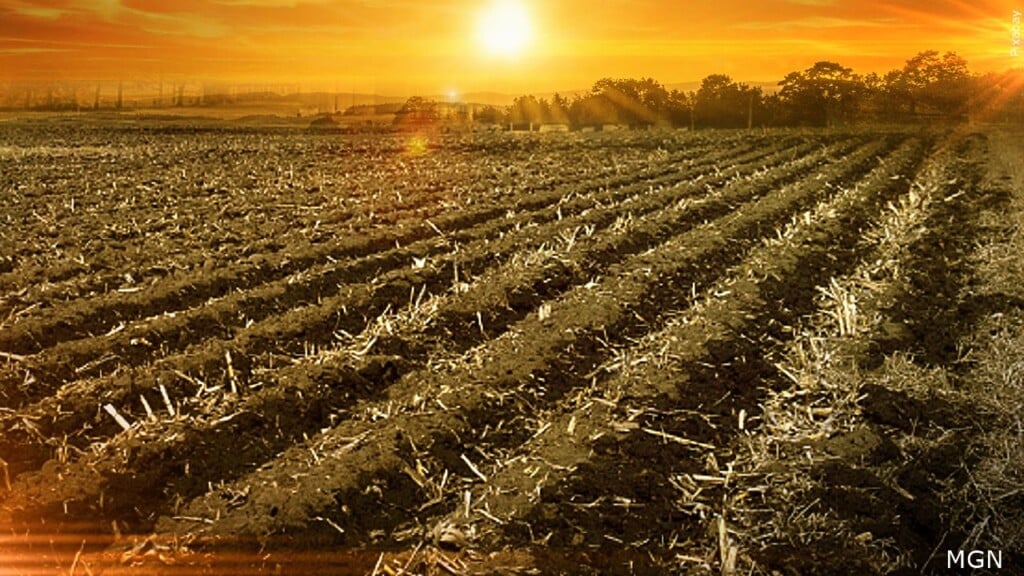
MACON, Georgia (41NBC/WMGT) – Across Georgia, the signs of drought are showing up in different ways, in dry soil, stressed crops, and a growing risk of wildfire.
Researchers say those conditions are not isolated. They are connected and already influencing how this season is unfolding.
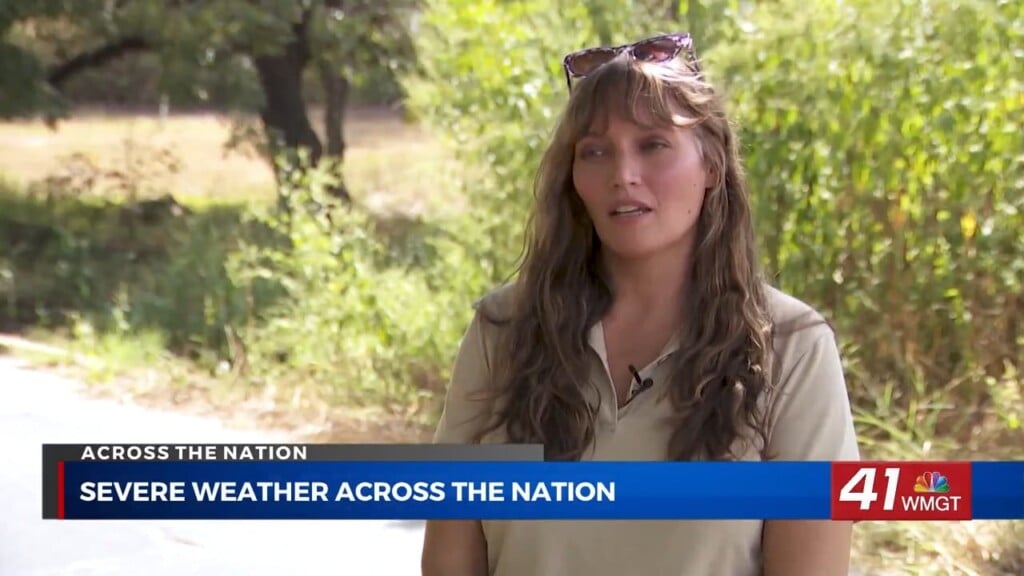
“In one sentence, early onset of fire season,” said Virginia Iglesias, PhD, a researcher at the University of Colorado Boulder.
Why wildfire risk is increasing
Wildfire risk depends on a few key ingredients: available fuel, dry conditions, and ignition.
Experts say all three are lining up.
Iglesias said the current drought is drying out vegetation and soil, increasing the likelihood that fires can start and spread.
“The soil is pretty dry… that means that the baseline is very high,” she said.
Once a fire starts, wind becomes a major factor.
“What wind does, it makes fires go faster,” Iglesias said.
Fires have already been reported in parts of the South, including Georgia and Florida, where dry vegetation is contributing to fire conditions.
How drought is impacting Georgia crops
The effects of drought are also showing up in agriculture, particularly in crops that play a major role in Georgia’s economy.
Andrea Eveland, PhD, a member and principal investigator at the Donald Danforth Plant Science Center, said drought conditions are widespread in key crops.
“Peanuts… 97% of the peanut production is currently under severe drought. 97% of cotton production is under drought currently,” Eveland said.
Without water, the early stages of crop growth can be affected.
“It’s really hard for plants to germinate in no water,” she said.
Experts say that a lack of water can affect how crops develop and produce yields.
What wildfire smoke can do to your health
Even for people far from active fires, smoke can still pose a risk.
Jeremy J. Hess, MD, MPH, professor of emergency medicine, environmental and occupational health sciences, and global health at the University of Washington, said wildfire smoke affects the body in multiple ways. “Smoke is an irritant and causes inflammation,” Hess said.
He said smoke exposure can affect both the lungs and the heart, increasing the risk of heart attacks, breathing problems, and other serious health issues.
Certain groups are more vulnerable, including:
- Children
- Older adults
- People with heart or lung conditions
- Outdoor workers
Why these conditions are harder to predict
Researchers say the broader pattern behind drought and wildfire risk is becoming more complex.
Richard Ross Shaker, PhD, a professor at the SUNY College of Environmental Science and Forestry, said changing conditions are making weather patterns less predictable.
“The system is becoming more complex,” Shaker said.
That complexity makes it more difficult to anticipate when and where conditions like drought will develop.
How it all connects
Drought, wildfire risk, crop stress, and air quality are all tied to the same underlying conditions.
Dry soil can affect crops.
Dry vegetation can fuel fires.
Fires can produce smoke that affects health.
Experts say those connections are already visible in Georgia as conditions continue across the state.