Piedmont Macon urges early breast cancer screening and risk awareness
Health care professionals explain breast cancer risk factors, possible warning signs and how genetic testing and nurse navigators help patients.
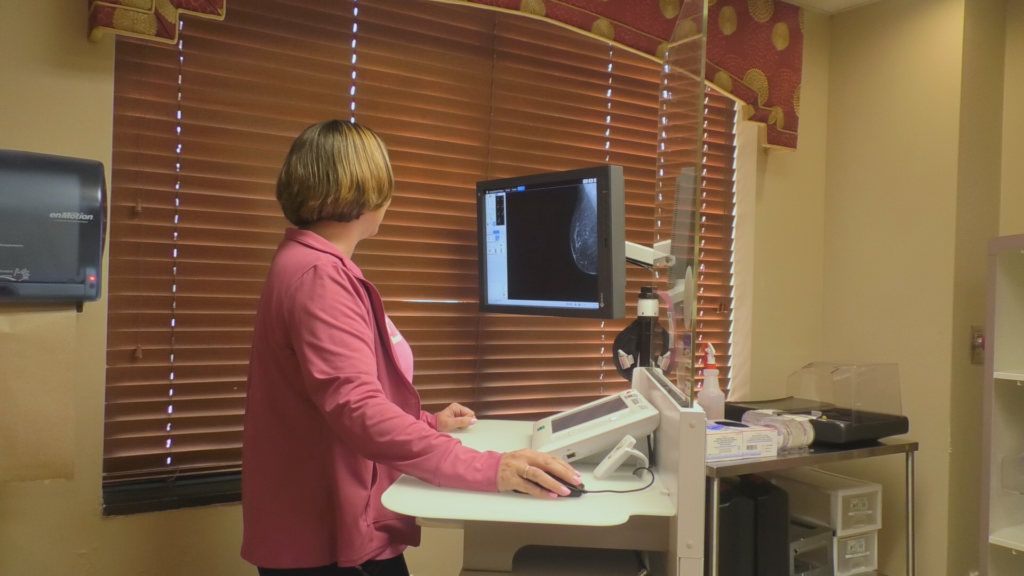
MACON, Georgia (41NBC/WMGT) — Piedmont Macon health care professionals are encouraging people to know their breast cancer risk, stay up to date on screenings and pay attention to possible warning signs during Breast Cancer Awareness Month.
“I’d rather patients be proactive than reactive,” Dr. Jamaal Crawford said. “Early detection is key, so getting your mammograms when you’re supposed to, starting at age 40 or earlier and getting them annually, can help us catch these cancers earlier and give us a better option to treat your appropriately if anything is found.”
This Breast Cancer Awareness Month, genetic testing and nurse navigators are helping patients understand their risk, explore treatment options and navigate their cancer journey.
“The primary risk is gender,” Crawford said. “Being a woman puts you at a higher risk. Your age, genetic history, family history, or if you have dense breast tissue, you are at higher risk for breast cancer. It’s really important to do your own breast exams. You might want to do them monthly in the shower, and you’re feeling for anything that might feel like a small piece of gravel. Anything that hurts a little bit, and also your nipple. If there’s nipple retraction, that can be a subtle sign of breast cancer.”
The manager of oncology services, Kimberly Lewis, says genetic testing can help patients understand their risk of developing certain types of cancer.
“Genetic testing is done because it will identify mutations in your genes,” she said. “So it looks to see if you have a gene mutation that might put you of your family members at a higher risk to develop cancer. And that’s not just for breast cancer, that’s for many types of cancer. At Piedmont, we have genetic counselors that are here to help patients.”
Oncology nurse navigator Terrasha Mathis says she helps patients understand their diagnosis and treatment options.
“We reach out to our patients to have a face to face with them,” Mathis said. “When they come in, they are very concerned, many unanswered questions. So, we help to ease that by providing them step by step information about their diagnosis. We read through their pathology reports with them. We go through different steps and treatments with them, and we offer them questions they can ask their providers.”
Doctors encourage women and men to stay up to date on screenings and talk with their health care provider about their risk.