Georgia Tech partners with NASA to train next generation of space workforce
Georgia Tech is helping prepare the next generation of workers for careers supporting NASA and the nation's space program.
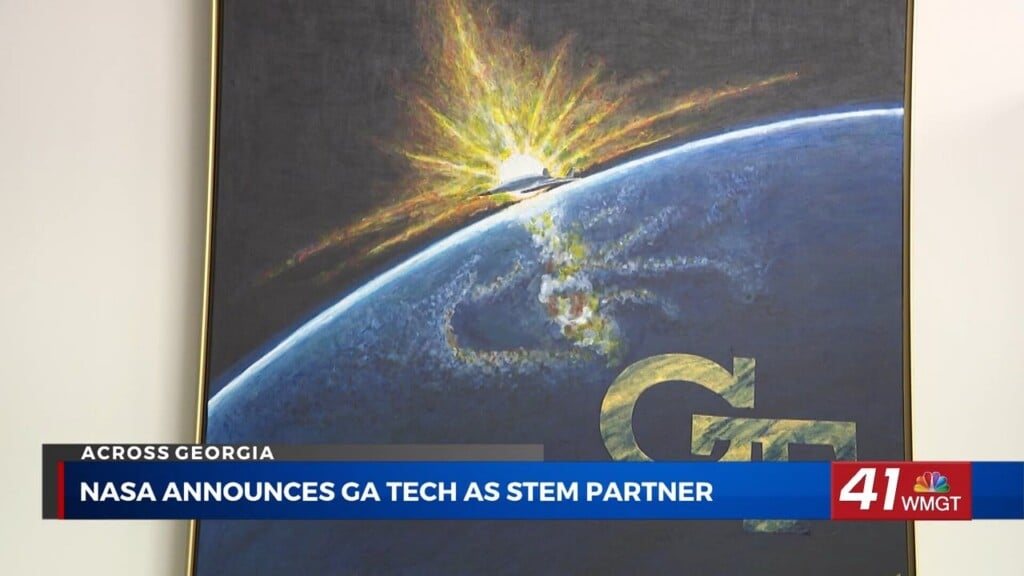
(CNN)- Georgia Tech is helping prepare the next generation of workers for careers supporting NASA and the nation’s space program.
Sophomore aerospace major Gabi Haigh says programs that introduce students to opportunities in science, technology, engineering and mathematics can help them see themselves pursuing careers they may have once thought were out of reach.
“Programs like these really do make the difference in someone saying, ‘I can do this. This is for me,’” Haigh said.
Georgia Tech already has a significant legacy in space exploration. The university has produced 14 astronauts, tied for the second-most among U.S. public universities. Its alumni have flown on 40 space missions and logged more than 595 million miles in space.
As NASA looks toward future missions, the agency is turning to institutions including Georgia Tech to help develop a new generation of skilled workers.
Dr. Stephen Ruffin, a professor at Georgia Tech’s Daniel Guggenheim School of Aerospace Engineering, says there is an urgent need to strengthen the workforce, particularly in manufacturing and technical fields.
Ruffin said more than 40% of workers in fields such as machining, manufacturing and technical operations are over the age of 55.
NASA awarded more than $10 million to seven U.S. institutions to strengthen state-based education and workforce pathways.
Students will receive training for careers including welding, electrical work and machining, along with other jobs directly connected to NASA’s space missions.
Some courses will allow students to earn short-term certificates in as little as six months, Ruffin said. Those courses can then be combined, or “stacked,” toward a two-year associate degree.
The new state hubs are designed to expand access to technical careers and prepare students with the skills needed to support NASA’s future missions as the agency looks toward the next era of space exploration.