Debate grows over Trump war powers as Iran ceasefire holds
A fragile ceasefire between the United States and Iran is holding 60 days into the conflict.
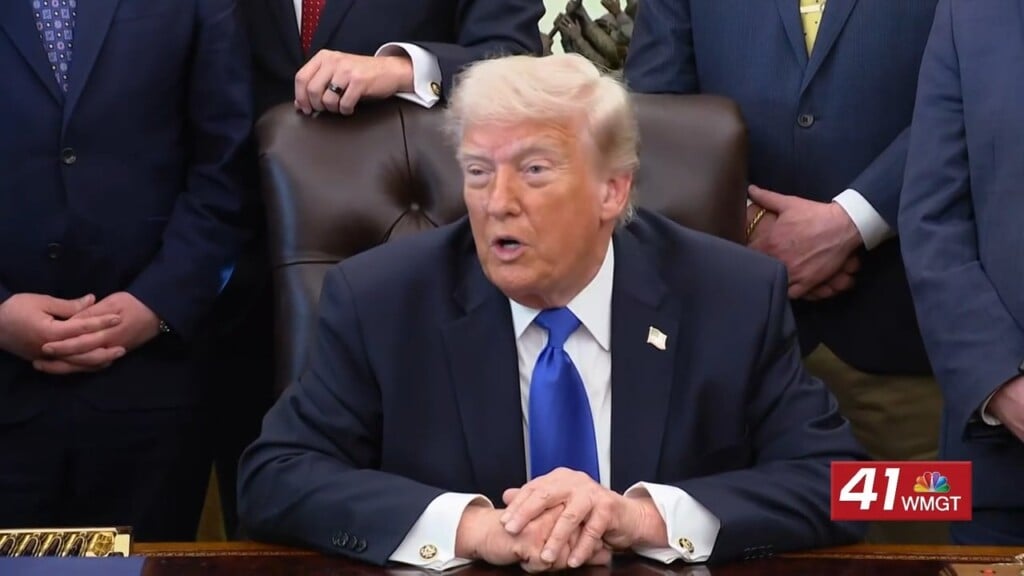
(NBC)- A fragile ceasefire between the United States and Iran is holding 60 days into the conflict, but political tensions are escalating in Washington over presidential war powers and continued military involvement in the region.
American warships remain deployed near the Strait of Hormuz as the U.S. continues enforcing a blockade on Iranian ports.
On Capitol Hill, Republican leaders are blocking efforts to force a vote limiting Donald Trump’s authority to continue military operations without congressional approval.
Mike Johnson argued lawmakers should not interfere while peace negotiations remain delicate.
“We’re trying to broker a peace,” Johnson said. “I would be very reluctant to get in front of the administration in the midst of these very sensitive negotiations.”
The dispute centers on the 1973 War Powers Resolution, which requires presidents to end military involvement after 60 days unless Congress authorizes continued action.
Johnson and White House officials argue the ceasefire means the United States is no longer actively engaged in war.
“We’re not at war,” Johnson said.
Democrats strongly disagree, arguing the continued military presence and blockade still fall under the law’s requirements.
James Walkinshaw said the administration cannot sidestep congressional oversight simply because active bombing has paused.
Meanwhile, negotiations toward a broader peace agreement remain stalled.
Trump said uncertainty surrounding Iran’s leadership has complicated efforts to reach a deal.
“They want to make a deal badly,” Trump said. “We have a problem because nobody knows for sure who the leaders are.”
The continued disruption in the Strait of Hormuz has also contributed to rising fuel prices in the United States, with Trump insisting prices will fall once the conflict fully ends.
Defense Secretary Pete Hegseth also defended the administration’s handling of the conflict while supporting a proposed $1.5 trillion defense budget request for 2027.
The proposal drew sharp criticism from Democrats, who questioned both the cost of the war and the administration’s broader military strategy.