Georgia’s American Journey: Old Capitol in Milledgeville highlights Georgia’s role in pivotal moments of U.S. history
The Old Capitol served as Georgia’s seat of government from 1807 to 1868. During that time, lawmakers inside the building made decisions that would leave a lasting impact on the state and the country.
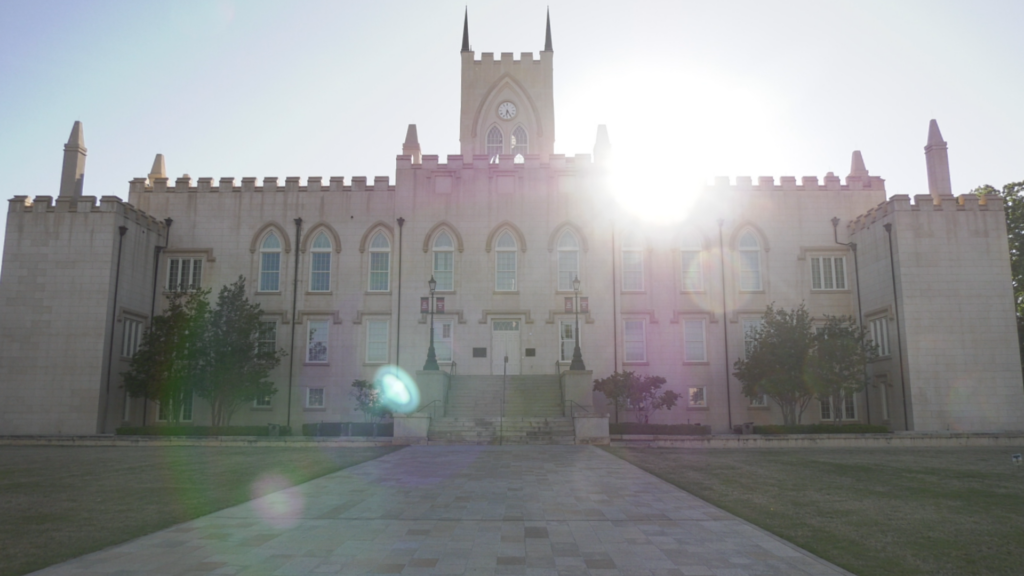
MILLEDGEVILLE, Georgia (41NBC/WMGT) – As America approaches its 250th anniversary, the Georgia Old Capitol in Milledgeville offers a powerful look at the state’s history and the decisions that helped shape the nation.
Jeffery Wells, vice president of online academics at Georgia Military College and a Milledgeville city councilman, says one moment stands above the rest.
Old Capitol played key role in Georgia’s decision to secede
“This building saw quite a bit of American and Georgia history. Perhaps the most important event in Georgia and American history that took place here was in January 1861, when Georgia made the decision to leave the Union on the third vote. That impacted not only American history, but it also really impacted Georgia’s pathway into the future,” Wells said.
The vote to secede did not come easily. According to Wells, there was deep uncertainty among Georgians about what the future would hold.
“When Georgia seceded from the Union, it took three votes because there were a lot of Georgians all across the state, particularly in the rural southern part of the state, who were really unsure if, number one, the South could win that war, number two, if it was a war worth fighting, and three, on the other side of it, win, lose, or draw, how would Georgia fare? It took lots of young men away from their homes. Mothers lost sons and husbands and brothers, and it also took millions of dollars, not only human capital but also financial resources, out of the state,” Wells said.
Trail of Tears tied to decisions made in Milledgeville
The building also played a role in earlier chapters of American history, including the forced removal of Native Americans.
“One of the other big events in this building is the Trail of Tears in Georgia. Of course, most of the Cherokee that were removed from Georgia marched all the way on foot to Oklahoma Territory, and that was done at the behest of legislators who worked right here in this room,” Wells said.
Old Governor’s Mansion reveals personal side of leadership
While the Old Capitol was the center of political power, nearby spaces like the Old Governor’s Mansion reveal how those decisions extended beyond government chambers.
“The Capitol was actually the formal seat of government, whereas the mansion was where the governing became a lot more personal. While the governor did have an office at the state house, he did have another here at the mansion. So leadership did not necessarily stop when he left Capitol Square. Decisions made in the Capitol did follow him home, whether it was into private meetings, correspondence, family life, political entertaining, and even the daily rhythms of the executive household,” said Suzy Parker, a museum assistant with Georgia College’s Department of Historic Museums.
Parker says the mansion provides insight into how leadership functioned in everyday life.
“What makes the mansion especially revealing is that it shows us how power was lived in actual form. Here, visitors can see that state leadership was not just speeches and legislation. It was also receiving callers, managing staff, hosting political gatherings, writing letters late at night, and even maintaining a household that depended on the labor of enslaved people,” Parker said.
Milledgeville’s role changed after the capital moved to Atlanta
After the Civil War, Georgia’s capital moved to Atlanta, leaving Milledgeville to redefine itself.
“This served as the center of government. It served, of course, eventually as a part of Georgia Military College, which was founded in 1879 as Middle Georgia Agricultural College, and there were so many people in Milledgeville who were very fearful of what would become not only of this property, but of their city,” Wells said.
Despite those concerns, the city endured.
“The big question was, can Milledgeville survive without being the capital of Georgia? And it did,” Wells said.
Today, Georgia’s Old Capitol in Milledgeville remains a symbol of leadership and the consequences of major decisions in history.
“What lessons can we take from Milledgeville and the old state in context of our 250th anniversary? Number one, I think that the Declaration still holds, and I think that the Constitution, which came later, still holds that leadership, when it is the right kind of leadership, can carry you through even the strangest and most difficult periods of history,” Wells said.
This story is part of Georgia’s American Journey: 250 Years, a 41NBC series examining Georgia’s history and its lasting impact on the United States.
Click here to explore more stories, videos, and features from across Middle Georgia.