Georgia’s American Journey: Mercer’s Baptist roots show how faith shaped education in early Georgia
Founded in 1833 as Mercer Institute, the school was created by Baptist leaders who wanted to establish their own institution for higher learning.
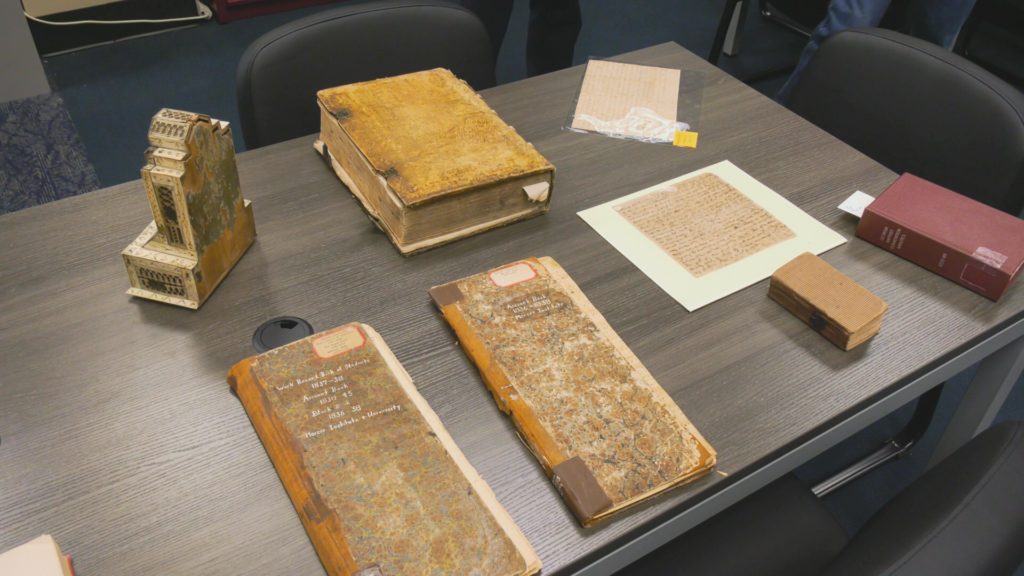
MACON, Georgia (41NBC/WMGT) – Mercer University’s history reflects the powerful role faith played in shaping education and leadership in early Georgia.
Founded in 1833 as Mercer Institute, the school was created by Baptist leaders who wanted to establish their own institution for higher learning.
Bryan Whitfield, Howard Giddens Professor at Mercer University, says faith-based groups sought to build schools separate from public universities.
“Early in Georgia’s history, the University of Georgia was established as a public university, but gradually faith-based groups in the state wanted to have their own institutions, and so Baptist emerged around the figure of Jesse Mercer and others to establish what was then Mercer Institute in 1833,” Whitfield said.
The institute originally focused on training Baptist ministers, but its mission quickly expanded.
“For a long time, Mercer had trained individuals, not simply as Baptist ministers, but to be liberally educated people to be leaders of civil society as well,” Whitfield said.
Mercer graduates would go on to influence fields including law, education, ministry and public leadership throughout Georgia and the South.
But historians say the university’s early history also reflects the social realities of the 19th century.
Douglas Thompson, chair of Mercer University’s history department, says the institution was closely tied to the slave economy during its early years.
“In the early part of the 19th century, all of the Mercer founders were slaveholders,” Thompson said. “They were wedded to the slave economy.”
According to historians, enslaved people were part of daily life at Mercer’s original campus in Penfield, performing labor for both the school and the surrounding town.
During the Civil War era, Mercer’s leaders did not challenge the institution of slavery, reflecting the views held by many Southern elites at the time.
Whitfield says history highlights the complicated relationship between faith institutions and social change.
“Sometimes Mercer and Baptists respond well to social change,” Whitfield said. “Sometimes they have a checkered history.”
Throughout its history, Mercer has navigated the tension between faith and society.
“There are moments where that faith claim will reinforce a social norm, and there’s a place where it will push against the social norms,” Thompson said.
Today, Mercer is one of Georgia’s largest private universities with programs in law, medicine, business and journalism.
Historians say its story mirrors the broader American experience, showing how religious institutions helped shape civic values, intellectual life and public leadership throughout the nation’s history.
This story is part of Georgia’s American Journey: 250 Years, a 41NBC series examining Georgia’s history and its lasting impact on the United States.
Click here to explore more stories, videos, and features from across Middle Georgia.