Keisha Lance Bottoms and Rick Jackson face off in Georgia gubernatorial debate
The debate featured questions from undecided voters from across Georgia.
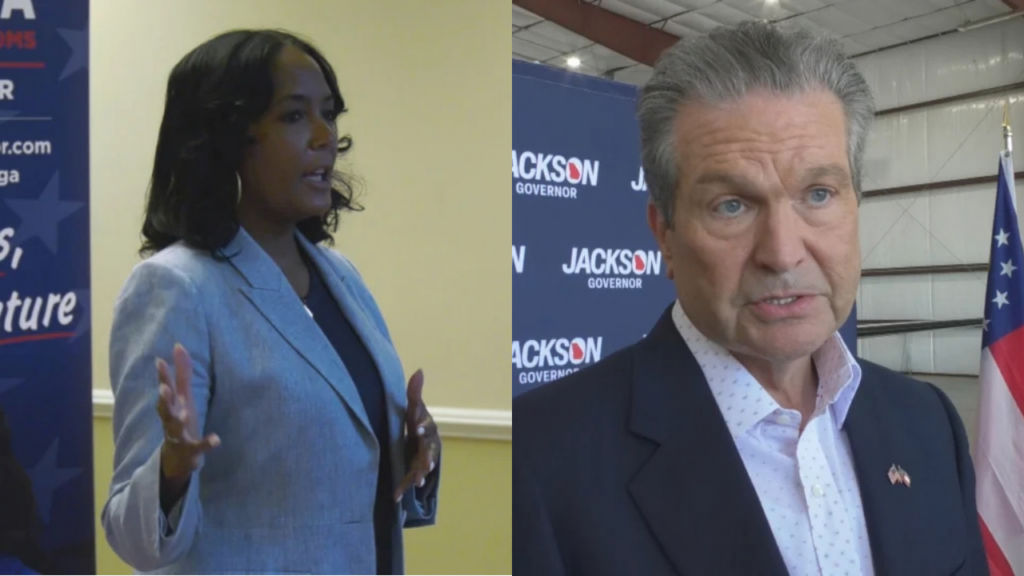
DORAVILLE, Georgia (41NBC/WMGT) – Democratic gubernatorial candidate Keisha Lance Bottoms and Republican candidate Rick Jackson faced off Tuesday night in an hourlong debate in Doraville, giving Georgia voters their first and only agreed-upon debate between the two candidates.
Bottoms has previously challenged Jackson to participate in six debates. Jackson accepted Tuesday night’s debate but declined the other proposed forums, including the Middle Georgia Matters Candidate Forum held in Macon.
That forum was moderated by 41NBC Morning News anchors Tyrik Wynn and Fiona King.
During Tuesday night’s debate, voters asked the candidates about Medicaid expansion, taxes, education, data centers, health care, the cost of living, public safety, technology and election security.
Health care was one of the major points of discussion.
Bottoms said expanding Medicaid would be a priority if she is elected governor and argued the state needs to do more to provide health care coverage and protect Georgia hospitals.
Jackson also said he supports expanding Medicaid, but said the state should do so in a way that protects existing federal funding. He also proposed other measures aimed at lowering health care costs, including prescription drug negotiations and greater price transparency.
The candidates also criticized each other’s records and approaches to health care.
Bottoms’ campaign argued after the debate that she offered voters specific plans to lower costs and expand health care.
“Tonight, Keisha connected with voters and offered specific policies to bring down costs, stop data centers from raising electricity rates and expand opportunities for all Georgians,” Bottoms campaign manager Tharon Johnson said.
Jackson’s campaign said he gave voters a clear explanation of his plans.
“Rick Jackson told Georgians who he is and how he will lower their costs, and he made clear he will never lose sight of a leader’s first job, which is keeping people safe,” said Garrison Douglas, a spokesperson for the Jackson campaign.
Affordability was another central issue.
Bottoms outlined several proposals she says would provide tax relief for Georgia families, including changes involving grocery and insurance-related taxes. She also supports raising the state’s minimum wage and expanding access to technical and community college programs.
Jackson focused on lowering taxes and creating higher-paying jobs. He has proposed cutting Georgia’s state income tax in half during his first term and lowering property taxes.
Both candidates said they want to make it easier for Georgians to afford everyday expenses, but they offered different approaches for accomplishing that goal.
The candidates also discussed education and how the state should prepare students for the workforce.
Bottoms has proposed increasing teacher pay and expanding access to technical and community college education.
Jackson emphasized workforce development, technical training and exposing students to career opportunities earlier in their education.
Both candidates also discussed the need to prepare Georgia students for a changing economy and the growing role of technology.
The growth of data centers in Georgia produced some of the sharpest disagreements of the night.
Bottoms has called for a pause on new data center construction while the state develops a broader strategy for the industry’s growth. She also raised concerns about the impact data centers could have on electricity rates and local communities.
Jackson rejected a blanket moratorium. He proposed requiring community support, environmental standards and financial benefits for consumers before new projects are approved.
Bottoms also questioned Jackson’s business interests and alleged he has investments connected to the data center industry.
Jackson denied those allegations and criticized Bottoms over data center projects approved while she was mayor of Atlanta.
The candidates also offered different approaches to public safety and election security.
Jackson emphasized public safety as one of his top priorities and repeatedly pointed to his concerns about crime and his criticism of Bottoms’ record as mayor of Atlanta.
Bottoms defended her record and pointed to investments made in public safety and mental health services during her time as mayor.
On election security, Bottoms raised concerns about Georgia’s election system and President Donald Trump’s comments about elections. She supports changes including the John Lewis Voting Rights Act and making Election Day a state holiday.
Jackson defended Georgia’s current election laws and said he does not believe federal intervention is necessary.
The candidates also disagreed over whether Jackson has previously suggested using the National Guard during an election. Jackson denied making that suggestion.
Following the debate, both campaigns declared their candidate the winner.
Bottoms’ campaign said she presented a clear plan for Georgia and argued Jackson avoided answering questions directly.
“This debate made one thing unmistakable: Rick Jackson is trying to buy and lie his way to the governor’s office,” Johnson said. “He has been hiding from Georgians and refusing to debate because he can’t give them the answers they deserve.”
Jackson’s campaign said the debate showed voters who he is and what he would do as governor.
“Keisha Lance Bottoms could not outrun her record as mayor of Atlanta tonight, and when asked to answer for it she deflected with false and misleading attacks because the truth about what she did to that city cannot be defended,” Douglas said.
The candidates will now return to the campaign trail ahead of the November 3 general election, with voters set to decide between their competing visions for the state.